

Kaizen For Health & WellbeingCourse code: YP090925
How Kaizen Can Be Used to Navigate Change Effectively
Change, even positive change, often triggers our brain’s fear response, leading to procrastination, overwhelm, and ultimately, a return to familiar (even if unhelpful) patterns.
Kaizen bypasses this inherent resistance by making the steps so tiny that they don’t activate the “fight-or-flight” mechanism. This allows us to integrate new behaviours and mindsets gently and sustainably.
One Small Step Can Change Your Life: The Kaizen Way (Book Link)
- Circumventing Fear: As Robert Maurer, Ph.D., explains, big, sudden changes can activate the amygdala (part of the emotional brain), leading to fear and resistance. By taking “small, easily achievable goals,” Kaizen allows us to “tiptoe right past the amygdala, keeping it asleep and unable to set off alarm bells.” This allows the rational, prefrontal cortex to remain engaged, fostering creativity and logical thought rather than reactive fear.
- Building Momentum and Confidence: Sarah Harvey emphasises that consistent, small efforts build momentum and confidence. Instead of feeling daunted by a massive shift, each tiny success reinforces the belief that positive change is possible and achievable. This cultivates a growth mindset, where challenges are seen as opportunities for learning rather than insurmountable obstacles.
- Sustainability over Intensity: Kaizen prioritises sustained effort over intense, short-lived bursts. This is particularly relevant for wellbeing, as lasting improvements often come from consistent practices rather than sporadic, heroic attempts. It allows for flexibility and adaptation, reducing the risk of burnout or giving up entirely.
- Deepening Self-Awareness: The cyclical nature of Kaizen (plan, do, check, act) encourages regular self-reflection. This process helps individuals become more attuned to their internal states, identifying triggers for unhelpful patterns and recognising the subtle positive impacts of their small changes. This heightened awareness is fundamental for navigating complex emotional landscapes.
The Cycle of Kaizen – Plan. Do. Check. Act.
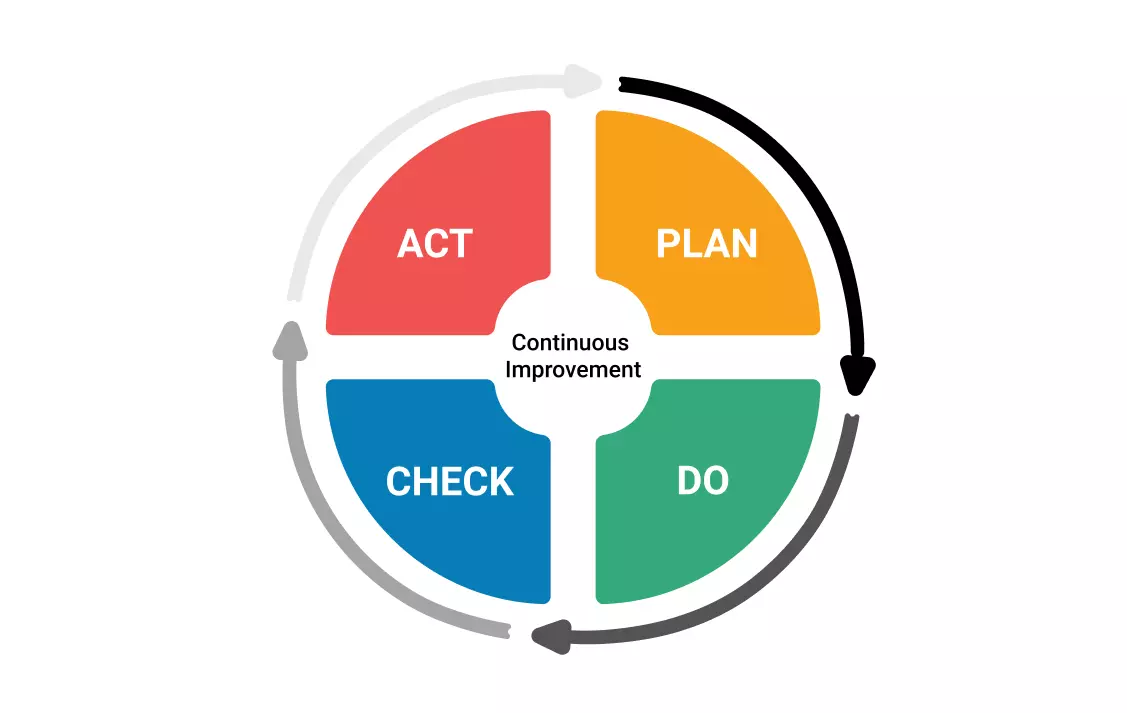
In essence, the adaptability of Kaizen lies in its fundamental principles of continuous, incremental improvement driven by those closest to the process, whether that’s a factory worker on an assembly line or an individual seeking to enhance their mental and emotional wellbeing.
The shift from the automotive industry to personal development underscores the universality and power of this philosophy in fostering positive change through consistent, incremental steps.
Clear Steps Using the Principles with Examples
Applying Kaizen:
- Identify a Small, Specific Area for Improvement: Instead of trying to tackle all negative thoughts at once (which can feel overwhelming), Sarah decides to focus on just one specific type of unhelpful thought. For example, she notices she frequently thinks, “I’m going to fail this project.”
- Set a Tiny, Achievable Goal: Creating a Moment of Space: Sarah’s initial goal isn’t to eliminate this thought entirely, but to become more aware of it and create a small space between the thought and her reaction. Her first small step is to simply try and notice one instance of this thought each day. She might decide to keep a small note in her phone or on her desk to jot it down when it occurs. This act of noticing begins to create a crucial pause.
- Focus on Small, Incremental Actions: Engaging the Prefrontal Cortex: Once Sarah is more aware of the thought, her next small step might be to pause for a few seconds each time she notices it. This pause is key, as it begins to engage her prefrontal cortex – the ‘thinking’ part of her brain, as described in Steve Peters’ Mind Management model (often referred to as ‘The Chimp Paradox’). Peters highlights the contrast between our emotional ‘Chimp’ brain, which can react strongly and irrationally to negative thoughts, and the rational human brain (prefrontal cortex). Creating this small space allows Sarah’s ‘human’ brain the opportunity to observe the ‘Chimp’s’ outburst without immediately being swept away by it.
- Review and Adjust (Small Steps): After a few days, Sarah might review how it’s going. If noticing the thought once a day feels easy, she might increase her goal to noticing it twice. If pausing feels manageable, her next tiny step could be to gently ask herself, “Is this thought definitely true?” just once a day. This simple question further engages the prefrontal cortex, prompting a more rational evaluation of the thought rather than accepting it as fact (a common characteristic of the ‘Chimp’ brain).
- Continuous Small Improvements: Over time, Sarah can gradually introduce slightly more challenging steps. These might include:
- Trying to rephrase the negative thought in a more balanced way (e.g., “This project will be challenging, but I can take it one step at a time”), actively using the prefrontal cortex to provide a more logical perspective.
- Identifying one piece of evidence that contradicts the negative thought, again a function of the rational brain.
- Practising a brief calming technique (like one deep breath) after noticing the thought. This can help to soothe the emotional brain and further empower the prefrontal cortex.
The Kaizen Effect:
By starting with incredibly small, manageable steps, Sarah avoids feeling overwhelmed by the task of changing her thinking patterns. The initial focus on creating a moment of space is crucial, as it allows her rational brain to become involved, rather than being immediately dominated by emotional reactions — a core principle in Peters’ model. Each tiny success builds her awareness, self-efficacy, and momentum. Over weeks and months, these small, consistent efforts can lead to a significant shift in how she manages her unhelpful thoughts, making them less frequent and less impactful on her wellbeing by enabling her to engage her prefrontal cortex more effectively. The key is the continuous, gentle progression, facilitated by creating that vital space for the ‘human’ brain to process and respond rather than the immediate reaction of the ‘Chimp’.
Materials Section
At the top of this page in the Materials Section you will find two useful documents to help you apply the Kaizen model to the small changes you want to make as you work towards managing your mind and emotions, better.
More Japanese methods and techniques to help in life.
1) Kaizen (small improvements everyday)
2) Shinrin yoku (connecting with nature)
3) Ikigai (reason for being)
4) Wabi sabi (celebrating imperfections)
5) Shoshin (embracing the beginners’ mindset)
6)Hara hachi bu (eat till you’re 80% full)
7) Ganbaru (doing your best; patience; unwavering perseverance)