

The Resonant Reset: Why Humming is the Ultimate ‘Micro-Habit’ for Nervous System Resilience
In our modern, high-pressure world, we are often told that “silence is golden” when it comes to stress relief. However, some of the most profound shifts in human physiology don’t happen in silence—they happen through sound.
At Impact Mental Health, we are dedicated to finding the “Kaizen” of wellbeing: small, 1% shifts that create significant, sustainable change. One of the most powerful, evidence-based tools we teach is also one of the simplest: The intentional hum.

Ancient Origins: The ‘Bhramari’ Breath
While modern science is only recently “discovering” the benefits of vocal vibration, these practices have been foundational to Eastern traditions for millennia. In Yoga, this is known as Bhramari Pranayama (Bee Breath).
The name comes from the Sanskrit word for the black Indian bumblebee. For thousands of years, practitioners have used this humming exhale to “drown out” the chatter of the mind (the ‘monkey mind’) and induce a state of deep meditative stillness. It was understood then, as it is now, that the vibration of the voice is a direct bridge to the soul’s tranquillity.
The Modern ‘Pulmonauts’: Science Meets Sound
Today, we no longer have to rely solely on intuition; we have the data. Leading “Pulmonauts” (respiratory pioneers) have highlighted why this ancient practice works so effectively on a biological level:
- The Nitric Oxide Miracle: James Nestor, author of the bestseller Breath, highlights a startling statistic: humming increases nasal Nitric Oxide production by 15-fold. This molecule is a potent vasodilator, helping to lower blood pressure and improve oxygen delivery throughout the body.
- Vagal Tone: Patrick McKeown (The Oxygen Advantage) emphasises the importance of the slow, extended exhale. Because the Vagus Nerve—the “command centre” of our parasympathetic (rest and digest) system—passes right through the larynx in the throat, the vibration of a hum acts as a physical massage for our stress response.
- Biomechanical Efficiency: Dr. Belisa Vranich, a world-renowned clinical psychologist and breathing expert, teaches us that most of us are “vertical breathers” (using our shoulders and necks). Humming encourages “horizontal breathing”—using the diaphragm and lower ribs. As Dr. Vranich notes, when we use the correct muscles to breathe and vibrate that breath, we provide the brain with an immediate signal of safety.
How Humming Heals: A ‘Just-In-Time’ Reset
Coming from a background in Lean Manufacturing, I view the human nervous system through the lens of efficiency. When anxiety spikes, our “internal factory” is in chaos. Humming is a “Just-In-Time” delivery system for calm.
When you hum, you are essentially:
- Lowering your Heart Rate: Activating the “vagal brake.”
- Balancing Emotions: Moving from “Fight or Flight” to “Rest and Digest” in under 60 seconds.
- Sparking ‘Feel-Good’ Hormones: Stimulating the release of oxytocin and endorphins through rhythmic resonance.
Putting it into Practice: The 2-Minute Impact Reset
You don’t need a studio or a choir to reclaim your peace. You can do this at your desk, in your car, or during a quiet moment at home:
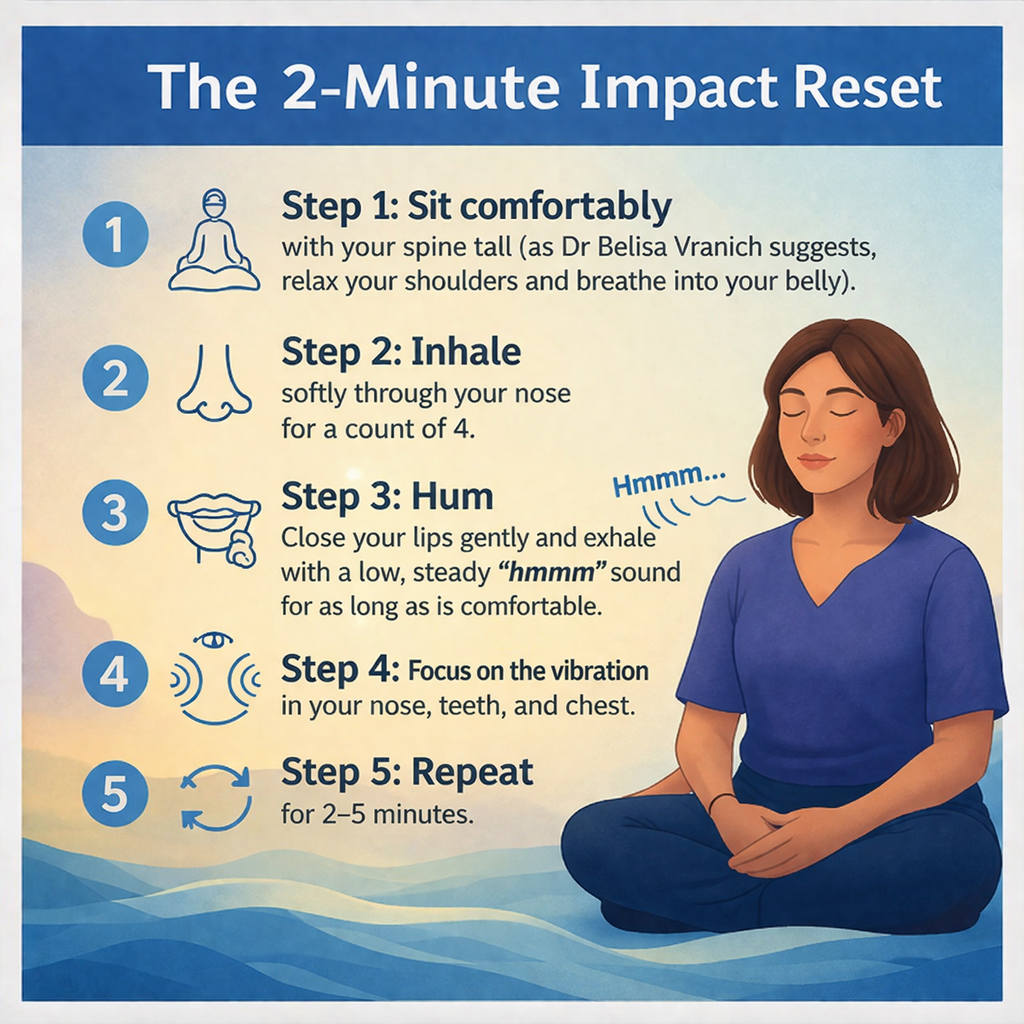
- Step 1: Sit comfortably with your spine tall (as Dr Belisa Vranich suggests, relax your shoulders and breathe into your belly).
- Step 2: Inhale softly through your nose for a count of 4.
- Step 3: Close your lips gently and exhale with a low, steady “hmmm” sound for as long as is comfortable.
- Step 4: Focus on the vibration in your nose, teeth, and chest.
- Step 5: Repeat for 2–5 minutes.
Reclaiming Your Voice
At Impact Mental Health, we believe that wellbeing shouldn’t be complicated or expensive. By bridging the wisdom of the East with the clinical precision of the West, we can find simple ways to navigate the challenges of modern life.
The next time you feel the weight of a busy day, remember: you carry the tool for your own “vocal transformation” with you at all times.
Don’t just breathe—resonate.


Leave a Reply
Want to join the discussion?Feel free to contribute!