• Link to Facebook
  • Link to LinkedIn
  • Link to Mail
  • Link to Youtube
  • Link to Instagram
  • Existing Learner Login
Impact Mental Health
  • Courses
    • The YOU Programme
    • YOUR Choice
    • Unlock Menopause
    • Mind Time Evening Courses
  • Corporate Services
  • Course Calendar
  • About Us
    • About Us
    • Jobs & Volunteer Positions
  • News
  • Contact
  • Refer Someone Else
  • Click to open the search input field Click to open the search input field Search
  • Menu Menu
A cartoon illustraton showing a brain with an anchor bringing calm on World Mental Health Day

Finding Your Anchor: Simple Habits to Manage Stress, Anxiety, and Overwhelm on World Mental Health Day

10/10/2025

Today, October 10th, marks World Mental Health Day—a vital moment to pause, reflect, and reaffirm that mental health is as crucial as physical health. In a world defined by relentless news cycles, digital demands, and global uncertainty, stress, anxiety, and overwhelm have become near-universal experiences.
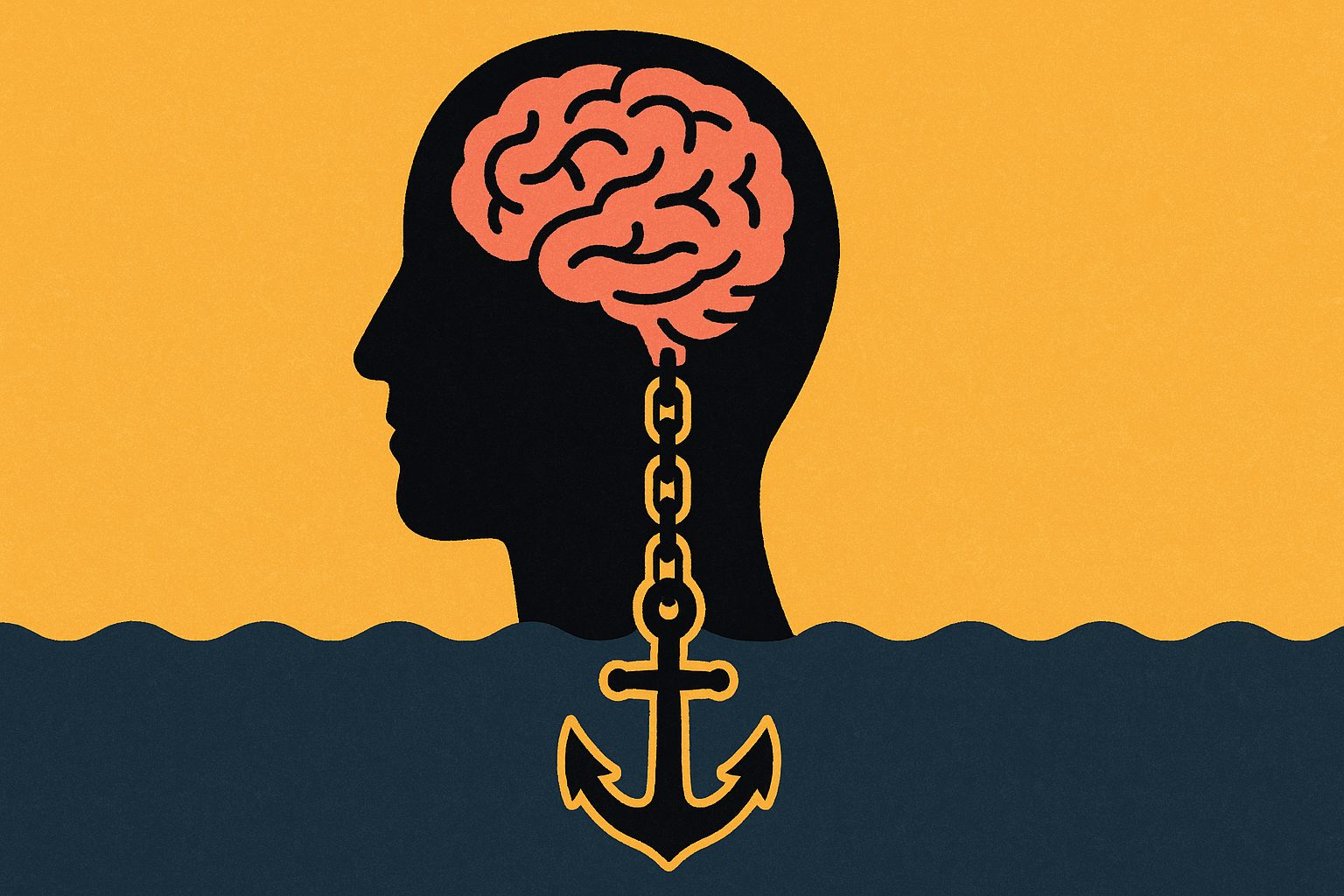
A cartoon illustraton showing a brain with an anchor bringing calm on World Mental Health Day

The good news is that managing these feelings doesn’t require overhauling your entire life. It starts with small, consistent habits that bring you back to a place of stability and calm.

The Modern Overload: Recognising Today’s Stressors

To manage our mental health, we must first recognise the unique pressures of modern life that are contributing to the pervasive sense of overwhelm.

In and Out of Work:

  • “Always On” Culture: The blurring of work and personal boundaries due to remote access and constant connectivity means many people struggle to switch off. The expectation of immediate responses fuels stress.
  • Job Insecurity and High Demands: Economic volatility and increasing workloads create a persistent, low-level anxiety about performance and job stability.
  • Financial Pressures: Nationally and globally, the rising cost of living, inflation, and stagnant wages are top stressors, leading to chronic anxiety about the future and making ends meet.

National and Global Concerns:

  • Constant Crisis News: Whether it’s political instability, environmental emergencies, or international conflicts, the 24/7 news cycle keeps us tethered to a feeling of global distress, often leading to a sense of powerlessness.
  • Digital Fatigue: The sheer volume of information, notifications, and social comparisons on digital platforms leads to sensory overload and feelings of inadequacy.

Four Simple Habits to Recalibrate Your Nervous System

While the pressures of the world are real, we can develop practices to build resilience and protect our inner well-being. Here are four fundamental strategies to help you manage stress, anxiety, and overwhelm:

1. Limit Constant News Exposure and Take Digital Breaks

The human nervous system is not built to constantly process tragedy and global crises. Limit your constant news exposure and deliberately step away from your screens. Dedicate specific, short periods each day to check the news, and strictly avoid “doomscrolling”—the habit of consuming large quantities of negative online news. Schedule digital breaks throughout your day, even if it’s just 15 minutes away from your phone, to allow your mind to rest and refocus on your immediate environment.

2. Practice Slow, Gentle Breathing Daily to Regulate Your Nervous System

Your breath is your most powerful, immediate tool for regulating stress. When we are anxious, we tend to breathe shallowly and quickly. You can consciously override the stress response by practising slow, gentle breathing daily. Try a simple box-breathing technique:

  • Inhale slowly for a count of four.
  • Hold the breath for a count of four.
  • Exhale slowly for a count of six.
  • Pause for a count of two.
  • Repeat for just 3-5 minutes. This simple practice signals safety to your brain, calming your heart rate and easing anxiety.

3. Anchor Yourself in Routines that Bring Calm and Stability

In an unpredictable world, routines are anchors. They provide a sense of control and predictability that combats the chaos of modern life. This doesn’t mean a rigid schedule, but rather establishing non-negotiable daily habits that bring stability. This could be a morning routine that includes quiet time and a healthy breakfast, or an evening ritual that prepares you for rest (like reading a book instead of watching TV). These small acts of consistency create a stable foundation for your day.

4. Reach Out for Help – Whether Through Friends, Professionals, or Community Support

It is a common misconception that seeking help is a sign of weakness. In fact, it is a brave and proactive step towards self-care. Reach out for help when you are struggling.

  • Friends and Family: Simply sharing your burdens with a trusted loved one can significantly reduce their weight.
  • Professionals: Don’t hesitate to contact a GP, therapist, or counsellor. Mental health professionals are trained to provide tools and support.
  • Community Support: Joining a local group, volunteer organisation, or support network can foster a sense of belonging, which is a powerful antidote to anxiety and isolation.

Further Recommendation

If you are looking for more actionable advice on how to integrate simple, effective habits into your day, we recommend listening to:

This podcast offers an insightful discussion on the profound impact of simple physiological adjustments, like breathing techniques, on your overall mental state. It’s a fantastic resource for anyone looking to make a meaningful change in how they handle life’s daily demands.

Remember: On World Mental Health Day and every day, your mental health matters. Be kind to yourself, implement these simple habits, and never hesitate to seek support.

Share this entry
  • Share on Facebook
  • Share on WhatsApp
  • Share on LinkedIn
  • Share by Mail
https://www.impactmh.org.uk/wp-content/uploads/2025/10/anchor.png 1024 1536 admin https://www.impactmh.org.uk/wp-content/uploads/2015/04/logo-v8.1.png admin2025-10-10 13:47:562025-10-10 13:48:00Finding Your Anchor: Simple Habits to Manage Stress, Anxiety, and Overwhelm on World Mental Health Day
0 replies

Leave a Reply

Want to join the discussion?
Feel free to contribute!

Leave a Reply Cancel reply

Your email address will not be published. Required fields are marked *

Latest News

  • An illustration showing a woman humming and breathing to aid nervous resilience.
    The Resonant Reset: Why Humming is the Ultimate ‘Micro-Habit’ for Nervous System Resilience30/03/2026 - 5:35 pm
  • A man opening barn doors to let the sunshine in
    A Light at the End of the Tunnel – A Learner’s Journey with Mind Time13/03/2026 - 12:33 pm
  • A cartoon image illustrating The Paralysis of Uncertainty
     The Paralysis of Uncertainty: Navigating the “Why Try” Mentality in a Volatile World 19/01/2026 - 4:08 pm
  • A cartoon image of a snowy village in winter
    🎄 Happy Holidays 2025 from the Impact Team! 🥳08/12/2025 - 1:25 pm

Impact Peer Support Services

  • Mind Time – Evening Courses
  • The YOU Programme
  • YOUR Choice
  • Unlock Menopause
  • Mental Health Training For Companies & Organisations

Privacy Policy & Terms and Conditions Of Use

Privacy Policy

Terms Of Use

This site is protected by reCAPTCHA and the Google Privacy Policy and Terms of Service apply.

Latest News

  • An illustration showing a woman humming and breathing to aid nervous resilience.
    The Resonant Reset: Why Humming is the Ultimate ‘Micro-Habit’ for Nervous System Resilience30/03/2026 - 5:35 pm
  • A man opening barn doors to let the sunshine in
    A Light at the End of the Tunnel – A Learner’s Journey with Mind Time13/03/2026 - 12:33 pm
  • A cartoon image illustrating The Paralysis of Uncertainty
     The Paralysis of Uncertainty: Navigating the “Why Try” Mentality in a Volatile World 19/01/2026 - 4:08 pm
  • A cartoon image of a snowy village in winter
    🎄 Happy Holidays 2025 from the Impact Team! 🥳08/12/2025 - 1:25 pm
Disability Confident Committed

Impact Mental Health

The Incuba,
1 Brewers Hill Road,
Dunstable,
Bedfordshire LU6 1AA

Phone: 01582 797596

Company Reg No. 8792103
© Impact Mental Health Peer Support
Web design and development - Rubber Duck Digital
  • Link to Facebook
  • Link to LinkedIn
  • Link to Mail
  • Link to Youtube
  • Link to Instagram
Scroll to top Scroll to top Scroll to top

This site uses cookies. By continuing to browse the site, you are agreeing to our use of cookies.

Privacy PolicyI acceptSettings

Cookie and Privacy Settings


How we use cookies

We may request cookies to be set on your device. We use cookies to let us know when you visit our websites, how you interact with us, to enrich your user experience, and to customize your relationship with our website.

Click on the different category headings to find out more. You can also change some of your preferences. Note that blocking some types of cookies may impact your experience on our websites and the services we are able to offer.

Essential Website Cookies

These cookies are strictly necessary to provide you with services available through our website and to use some of its features.

Because these cookies are strictly necessary to deliver the website, refusing them will have impact how our site functions. You always can block or delete cookies by changing your browser settings and force blocking all cookies on this website. But this will always prompt you to accept/refuse cookies when revisiting our site.

We fully respect if you want to refuse cookies but to avoid asking you again and again kindly allow us to store a cookie for that. You are free to opt out any time or opt in for other cookies to get a better experience. If you refuse cookies we will remove all set cookies in our domain.

We provide you with a list of stored cookies on your computer in our domain so you can check what we stored. Due to security reasons we are not able to show or modify cookies from other domains. You can check these in your browser security settings.

Google Analytics Cookies

These cookies collect information that is used either in aggregate form to help us understand how our website is being used or how effective our marketing campaigns are, or to help us customize our website and application for you in order to enhance your experience.

If you do not want that we track your visit to our site you can disable tracking in your browser here:

Other external services

We also use different external services like Google Webfonts, Google Maps, and external Video providers. Since these providers may collect personal data like your IP address we allow you to block them here. Please be aware that this might heavily reduce the functionality and appearance of our site. Changes will take effect once you reload the page.

Google Webfont Settings:

Google Map Settings:

Google reCaptcha Settings:

Vimeo and Youtube video embeds:

Other cookies

The following cookies are also needed - You can choose if you want to allow them:

Privacy Policy

You can read about our cookies and privacy settings in detail on our Privacy Policy Page.

Privacy Policy
Privacy Policy