
Mental Health Support Is Moving Closer to Home, But What Does That Mean for You?
You may have seen recent news about a major expansion of mental health support across England.
The Government has announced £343 million to create 159 new NHS mental health facilities, with the aim of helping people access support earlier, closer to home, and before problems reach a crisis point.
That sounds positive, but what does it actually mean?
And what does it mean for people living here in Bedford Borough and Central Bedfordshire?
Let’s break it down.
What’s changing?
The Government is planning to open:
- 100 new Community Mental Health Centres, offering walk-in support without needing a referral
- 59 Mental Health Emergency Departments, providing specialist support for people experiencing a mental health crisis.
The first facilities are expected to open from autumn 2026, with further sites following from March 2027.
The aim is to make it easier for people to get the right help earlier, rather than waiting until things become much more difficult.
What does “closer to home” mean?
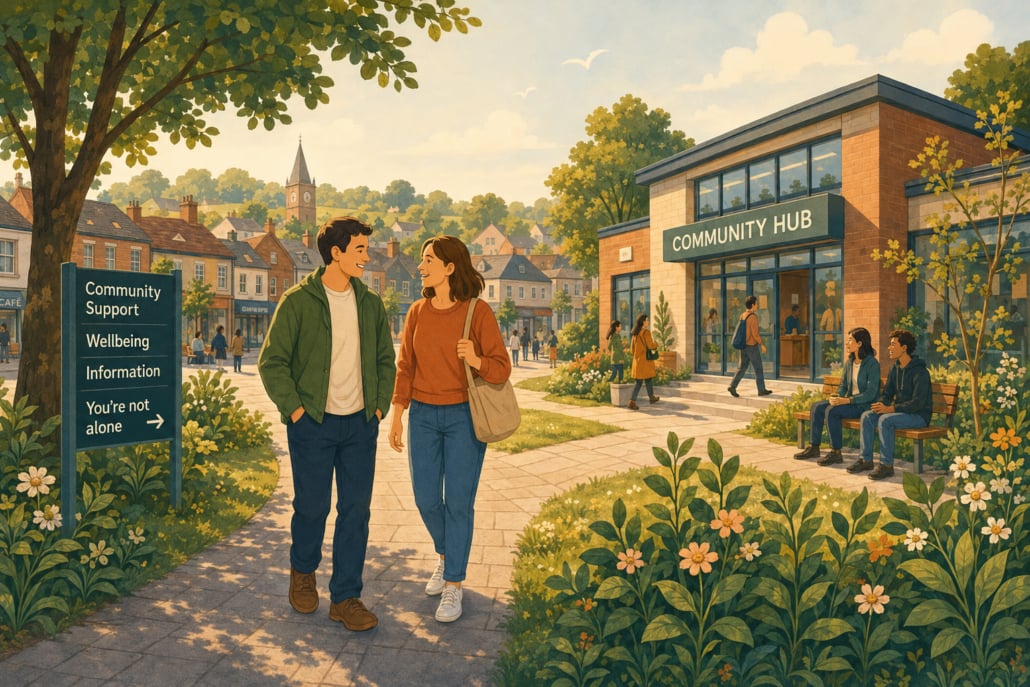
It means bringing support into the communities where people live.
Some of the new Community Mental Health Centres will be new buildings, while others may be based in existing community or high-street locations such as libraries and other local spaces.
The idea is that mental health support should feel like part of the community, not something that people only encounter when they reach a crisis.
Do I have to wait until I’m really struggling before I ask for help?
No, and that’s one of the most important messages behind these changes.
The new approach makes it easier for people to get support earlier.
Sometimes we wait because we tell ourselves:
“I’m not bad enough.”
“Someone else needs help more than I do.”
“I’ll see how I feel in a few weeks.”
“I don’t even know what kind of help I need.”
But getting support early can sometimes prevent things from becoming more difficult later.
Looking after your mental health isn’t something you have to earn by becoming unwell enough.
Is this just about the NHS?
No.
The Government’s plans recognise that the NHS alone doesn’t create good mental health.
The new community approach aims to connect mental health services with GPs, councils, voluntary organisations, families, and housing and employment support.
That’s important because the things affecting our mental health don’t always fit neatly into one service.
Money worries, loneliness, housing problems, unemployment, relationships, physical health and lack of confidence can all affect how we feel.
Sometimes the best support helps with the wider picture, not just one symptom.
Why is prevention becoming so important?
The Government’s 10 Year Health Plan for England sets out three major changes:
From hospital → to community
From analogue → to digital
From sickness → to prevention
The idea is to move towards a health service that doesn’t simply respond when people become unwell, but does more to help people stay well and identify problems earlier.
For mental health, that means thinking about what we can do before someone reaches a crisis point.
Prevention doesn’t mean that everyone should simply “look after themselves”.
It means creating opportunities for people to access information, support, treatment and practical help at the right time, and making it easier to ask for that help.
What about mental health support in Bedfordshire?
The new national programme is being introduced in phases, and not every area is receiving a new centre in this first rollout.
In the East of England, the first announced locations include a new Community Mental Health Centre in Luton, as well as a Mental Health Emergency Department at Calnwood Court in Luton. The Government has stressed that final locations remain subject to design, procurement and business-case approvals.
So what about Bedford Borough and Central Bedfordshire?
A range of mental health and wellbeing support is already available locally.
Bedford Borough provides information about NHS mental health services, community support and voluntary organisations, including Mind BLMK. Community mental health teams and early-intervention services also exist.
Central Bedfordshire is also developing integrated health and care hubs, designed to bring different health, care and wellbeing services together within local communities. The plans include community mental health services, wellbeing services, voluntary and carer support and social prescribing.
In Dunstable, the Grove View Integrated Health and Care Hub already includes community and mental health services alongside GP, social care, rehabilitation, prevention, wellbeing and voluntary-sector support.
So while change won’t happen overnight, the wider direction is clear:
Support is increasingly being designed around people and their communities.
What can I do for my mental health now?
You don’t have to wait for a new building or a new service to start looking after your mental health.
Small things can make a difference.
You could:
- get outside and move your body
- make time for sleep and rest
- stay connected with people you trust
- talk about how you’re feeling rather than keeping everything inside
- learn to recognise your thoughts, feelings and stress signals
- try breathing, mindfulness or other techniques that help you manage difficult moments
- break overwhelming tasks into smaller, more manageable steps
- do something that gives you a sense of purpose or achievement
- learn more about your own mental health and what helps you feel well.
And remember: you don’t have to do everything at once.
Sometimes the most helpful change is a very small one.
If you feel you need more support, community, voluntary, and NHS services are available locally. Bedford Borough’s wellbeing information brings together local services and support sources, while Mind BLMK provides community-based mental health and wellbeing services across Bedfordshire.
And if you’re worried about your mental health, talking to your GP or another appropriate professional can be an important first step.
What if I don’t know what kind of help I need?
That’s okay.
One idea behind the new community approach is to make it easier for people to find support without having to understand the whole system first.
You don’t necessarily need to know:
“Do I need this service or that service?”
You can simply start by saying:
“I’m struggling, and I’m not sure what I need.”
That’s enough to begin a conversation.
Where can I get help?
If you need someone to talk to or want to find out what support is available, you don’t have to work it all out yourself.
Bedford Borough
Information about local mental health and wellbeing support, including NHS and community services.
→ Bedford Borough mental health support page
Central Bedfordshire
Information about local mental health, wellbeing and community support.
→ Central Bedfordshire support page
Mind BLMK
Community-based mental health and wellbeing support across Bedfordshire.
→ Mind BLMK page
If you’re in immediate danger or need urgent help, use the appropriate emergency or crisis service, you don’t need to wait for a routine appointment.
And that’s really what this change is about
The new investment in mental health services is significant, but the bigger change is about when and where we offer support.
Instead of waiting for people to reach crisis point, the ambition is to make support easier to access earlier.
Instead of seeing mental health as something separate from the rest of our lives, the aim is to connect it with our health, relationships, work, housing and communities.
Instead of expecting people to navigate complicated systems on their own, we increasingly recognise that support needs to be easier to find and closer to where people live.
At Impact, we believe that prevention starts before crisis.
Sometimes people don’t need a clinical intervention. They may need somewhere safe to start, someone to listen, practical tools, greater understanding of their own wellbeing, or simply the confidence to take their next step.
Community support plays an important part in that.
You don’t have to wait until things become a crisis before you start looking after your mental health.
And you don’t have to know exactly what you need before you ask for help.
Sometimes, the most important thing is simply taking that first step.
At Impact, we believe that looking after our mental health isn’t something we should only think about when we’re struggling.
Our courses give people the opportunity to learn more about their mental health, understand their thoughts and behaviours, develop practical tools and strategies, build confidence and take positive steps forward, in a supportive, welcoming community environment.
You don’t need to be in crisis to benefit from support. Sometimes, learning a little more about yourself can be a powerful place to start.
To learn more about our current courses, visit our Course Calendar to see what’s available in your area.


Leave a Reply
Want to join the discussion?Feel free to contribute!