It takes courage to try something new when you’ve felt let down by support systems in the past. One of our recent Mind Time participants joined us with understandable hesitation, having spent half their life in counselling without the results they needed.
What happened over the course of two online sessions surprised even them. By providing a safe space and actionable resources, we were privileged to help this learner move from a place of “anticipating the worst” to feeling equipped for the future. We are incredibly proud to share their experience in their own words.
“My experience with Impact Mental Health’s two-evening program
Before Impact came along, I had been in counselling/therapy, honestly, half my life. It never really worked, and it had opposite effects on me, lowering my trust and my confidence, making me relive my trauma in a negative way.
I was extremely hesitant when Impact came along. Group session online sounded like hell, to be honest. But I attended the first session, and it took some time to get into, I’ll be honest. But as the first session went on, I felt calmer, less on guard, which is a very rare feeling for me, as someone who always anticipates the worst at all times. I came out of that first session hopeful and excited, for the session the day after.
Coming out of both sessions, I can say with a lot of confidence that this was the best kind of support I’ve received, and I don’t say that lightly. It not only taught me in the moment, but has given me, frankly, lifelong tools to continue supporting myself, and hopefully building on improving my mental health. It’s early days, I didn’t expect a cure, but it may have saved my life. Again, I don’t say that lightly, and I cannot thank Déanne and Jackie enough. Of course, you, as the individual, need to put in the time and effort, but when people give you the resources and show you a way out, you can finally see a light at the end of the tunnel. And that is powerful.
Michael from Hertfordshire 💜“
Two evenings. Lifelong tools. Your turn.
Don’t wait half a lifetime for the support you deserve. Join Déanne and Jackie for our next Mind Time session and discover the resources that have already changed lives.
The information packed Mind Time Course is designed to educate, support and empower people to immediately start to work on understanding and improving their mental wellbeing, and is delivered over two evenings.
This is a fantastic course on its own for time-strapped people looking to make instant change to their wellbeing, or as a taster course before joining us on one of our longer day time courses.
This course offers a free One-to-One session after course completion
Dates
Tuesday 28th April, 2026
Wednesday 29th April, 2026
Times for each session
6.30 to 9.30pm
Delivered live online using Zoom
The information packed Mind Time Course is designed to educate, support and empower people to immediately start to work on understanding and improving their mental wellbeing, and is delivered over two evenings.
This is a fantastic course on its own for time-strapped people looking to make instant change to their wellbeing, or as a taster course before joining us on one of our longer day time courses.
This course offers a free One-to-One session after course completion
Dates
Tuesday 19th May, 2026
Wednesday 20th May, 2026
Times for each session
6.30 to 9.30pm
Delivered live online using Zoom
https://www.impactmh.org.uk/wp-content/uploads/2026/03/open.jpg10241536adminhttps://www.impactmh.org.uk/wp-content/uploads/2015/04/logo-v8.1.pngadmin2026-03-13 12:33:042026-03-13 12:38:41A Light at the End of the Tunnel – A Learner’s Journey with Mind Time
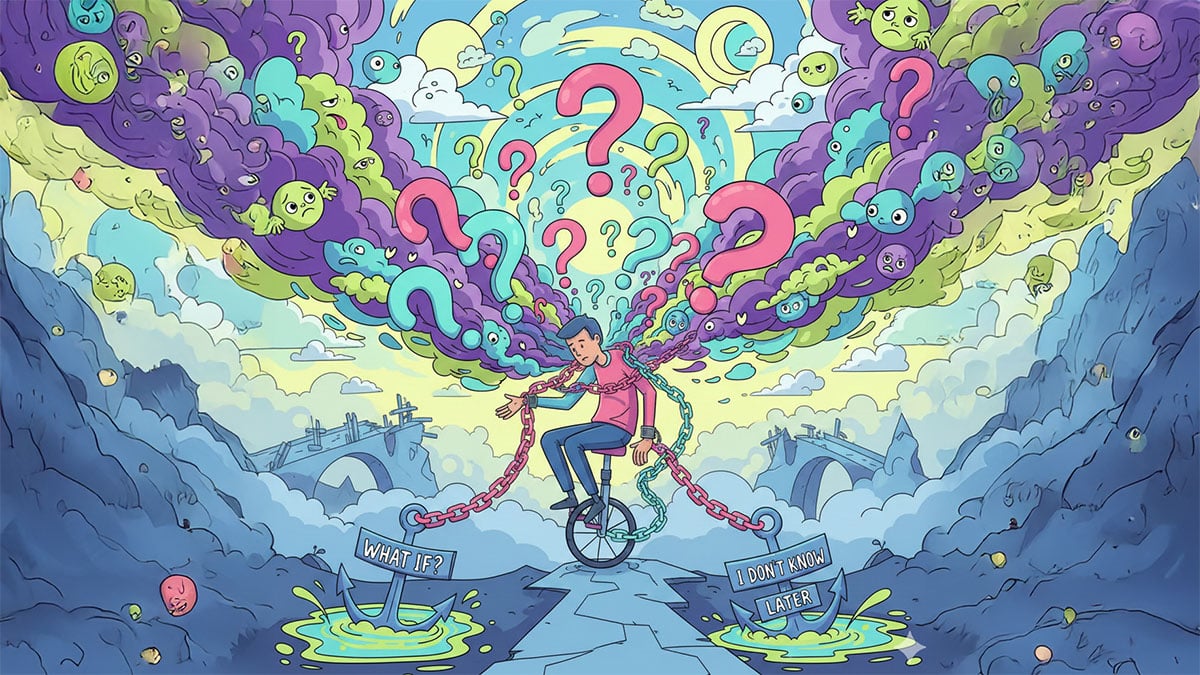
Let’s be honest: “Where do you see yourself in five years?” has gone from a standard interview question to an almost existential crisis.
For decades, the path seemed relatively clear. You work hard, you plan, you save, you climb the ladder, and you secure your future. But recently, the goalposts haven’t just moved; they seem to be actively vanishing.
We are living through a period of relentless, compounding uncertainty. Economic volatility, geopolitical instability, rapid technological disruption (hello, AI), and shifting societal norms have created a perfect storm for anxiety. The future feels less like a destination we are travelling toward and more like fog we are trying to navigate.
This isn’t just an abstract economic issue; it is profoundly impacting our psyches, our homes, and our workplaces.
The Rise of the “Why Try?” Attitude
When the reward for effort becomes unclear, the effort itself can start to feel futile.
I’m noticing a distinct shift in the national mood—a quiet undercurrent of resignation among many capable, driven people. It manifests at work as “quiet quitting” or extreme risk aversion. At home, it looks like putting off major life milestones—buying a house, starting a family, or even just planning a summer holiday—because “who knows what will happen by then?” Socially, it can look like shrinking circles and a reluctance to commit to future plans.
It’s easy to label this as apathy or a lack of resilience. But I believe it’s something deeper.
It’s fear disguised as exhaustion.
This “why try” attitude is often a defence mechanism. It is a psychological trauma response to sustained unpredictability. If you can’t predict the outcome, the safest thing to do is stop betting your energy on the future. It’s a way of preemptively managing disappointment.
Fear in the Driver’s Seat
When uncertainty dictates our lives, fear becomes our primary operating system.
At Work: We stop innovating. We cling to safe, outdated processes because the unknown of trying something new feels too risky. Leadership becomes reactive rather than proactive.
At Home & Socially: We doomscroll rather than connect. We hoard resources rather than investing in experiences. The anxiety of the macro world bleeds into our micro interactions, making us shorter-tempered and less empathetic.
Future Planning: Planning requires a baseline assumption of stability. Without it, planning feels like writing fiction.
How Do We Manage the Paralysis?
We cannot simply “positive vibes” our way out of genuine global instability. However, we also cannot afford to let fear hold the pen as we write the next chapter of our lives or our businesses.
If the long-term is blurry, we must sharpen our focus on the near-term. Here is how we can help ourselves, our colleagues, and our communities navigate this era of uncertainty:
Shrink the Horizon (Self-Management) When looking five years ahead causes panic, pull your focus back to five months, five weeks, or even five days. What concrete steps can you take this week that align with your goals? By shrinking the horizon, you regain a sense of agency. Action is the antidote to anxiety.
Normalise the Uncertainty (Workplace Leadership) As leaders and colleagues, the most powerful thing we can do is acknowledge the elephant in the room. Psychological safety means it’s okay to say, “I don’t know what Q4 will look like, but here is our strategy for Q1.” Don’t pretend to have a crystal ball. Transparency about unknowns builds trust far better than false confidence.
Anchor to Values, Not Just Outcomes (Future Planning) Plans break. Markets crash. Jobs change. But values tend to hold steady. If your goal was “security,” and the traditional route to security is blocked, ask yourself what else provides that feeling right now. Is it upskilling? Is it deepening community ties? Anchor your planning to why you want things, not just the what.
Connection Over Isolation (Community) Fear thrives in isolation. The “why try” mentality gains traction when we feel we are facing the void alone. Share your anxieties with trusted friends or mentors. You will almost certainly find they feel the same. Community resilience—the ability to weather storms together—is stronger than individual grit.
Moving Forward in the Fog
It is okay to feel afraid right now. It is a rational response to an irrational world.
But we must recognise when that fear shifts from a warning signal to a stop sign. The future is uncertain, yes. But we still have the capacity to adapt, to connect, and to make meaningful progress, even if we can only see one step ahead at a time.
Let’s stop asking “why try,” and start asking “what’s the best next step?”
https://www.impactmh.org.uk/wp-content/uploads/2026/01/Paralysis.jpg6751200adminhttps://www.impactmh.org.uk/wp-content/uploads/2015/04/logo-v8.1.pngadmin2026-01-19 16:08:042026-01-19 16:11:14 The Paralysis of Uncertainty: Navigating the “Why Try” Mentality in a Volatile World
As 2025 draws to a close, what a turbulent year it’s been on both a national and global scale. With so many things feeling outside our control, it’s more important than ever to remember that we do have the power and the option to help ourselves manage our responses to challenging situations.
We all have the means to rebalance, build resilience, and learn to manage our minds. It can start with something as simple as learning how to breathe for calm.
🧘 Try This Calming Breath Practice:
Take a moment right now. Place one hand on your chest and one on your stomach.
Breathe in slowly through your nose for a count of 4, letting your stomach rise (not your chest!).
Hold your breath gently for a count of 2.
Exhale slowly through your mouth for a count of 6, feeling your stomach flatten.
Repeat this three or four times. You should feel a wonderful sense of calm start to wash over you!
Blending Contracts and Building New Friendships! 👋
It’s been a challenging but exhilarating year as we’ve worked to blend our two contracts from Central Bedfordshire and Hertfordshire into our online courses. We were absolutely thrilled to secure the new 2025-26 contract in Hertfordshire!
We’ve had the pleasure of meeting so many new people—our wonderful new learners, great professionals, and the brilliant Step2Skills team. We want to send a huge shout-out and thank you for your patience, support, and encouragement as we’ve navigated this new chapter.
And of course, it’s been just wonderful to continue our work with the amazing BESA team in Central Bedfordshire and Bedford Borough. They are a truly dependable, friendly, and skilled group, and we love working alongside them!
We also want to give a massive thank you to all our new friends and colleagues who have been referring learners to our courses; your support is invaluable!
Podcast Fun & Festive Closures 🎙️
The Impact team is having the best time putting together our brand-new podcast series, which will be available soon!
Anyone who knows Jackie and me (Deanne) will understand that much laughter and fun has been had during recording, which has caused a slight delay in the release—but in the best possible way! The Impact Mind Management Matters series will be hitting your inbox and socials very soon, so keep an eye out!
Just a reminder about our festive break: Impact will close on Friday, 19th December, and reopen on Monday, 5th January 2026!
🌟 Star Referrer Recognition: Ronald Wicks
We couldn’t educate and support the many learners who enrol on our courses without the hard work and engagement of the outstanding professionals who continue to refer people. Thank you for your commitment to Impact and to those you are supporting.
This is a special thank-you and heartfelt recognition ofRonald Wicks, Health Work Coach at the Bedford Job Centre, who has earned our inaugural Star Referrer status for Term 1 (August – December 2025).
Ronald has referred over 30 learners to Impact during this period—a remarkable achievement in quantity. However, the true impact of his work lies in the quality of his engagement.
Many of the learners we have had the pleasure of working with have spoken generously and affectionately about their interactions with Ronald. They consistently highlight his patience, understanding, and genuine empathy.
This compassionate support has been vital for those struggling with their mental health, enabling them to feel secure enough to take the crucial step of seeking support and gaining the essential skills needed to manage their well-being better. Ultimately, this foundational work empowers them to feel ready to pursue meaningful employment or further education.
Ronald Wicks is a true partner in our mission, embodying the dedication required to move learners forward.
Get ready for the family, friends, fun, and festivities—whatever they may bring—by learning how to manage your mind, regulate your emotions, and enjoy it all with a new approach.
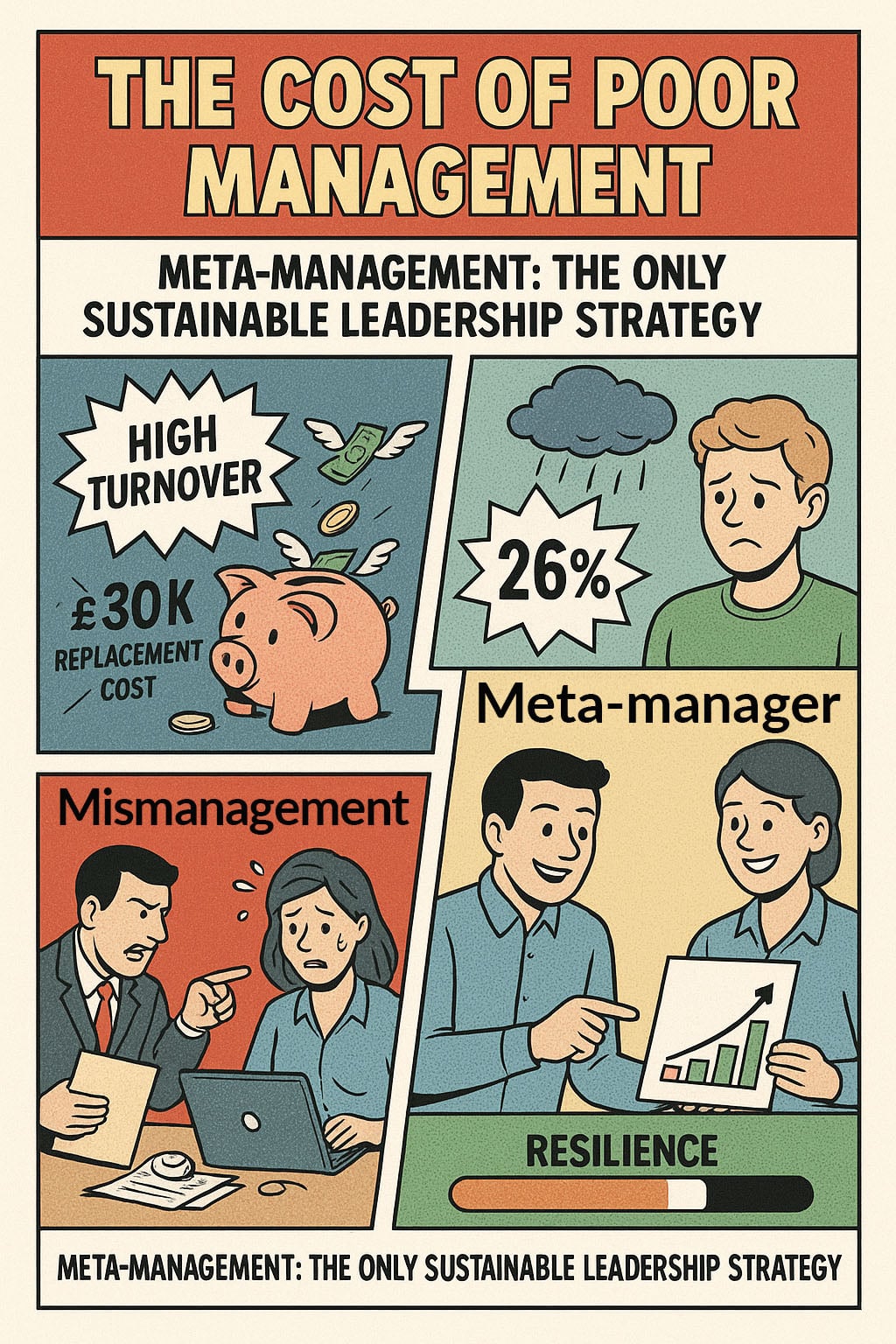
In a world increasingly dominated by Artificial Intelligence (AI) and facing intense economic uncertainty, our human capital is the only true differentiator we have left. Yet we consistently treat our workforce not as assets to be nurtured and developed, but merely as resources to be coordinated.
This approach has led to a national crisis. At our organisation, Impact Mental Health, we work daily with individuals desperate to re-enter the labour market, many of whom come to us with a worrying shared history: long-term absenteeism driven by stress, anxiety, and clinical depression. These devastating issues are often, and tragically, traceable to one root cause: poor management, mismanagement, and managers who are insufficiently trained, making poor decisions without the knowledge, training, or experience required to support their employees genuinely.
The Delegating Dilemma: Process vs. Purpose
I am not suggesting we stop delegating; that would negate the very purpose of having a workforce. But we must be acutely aware that there are two fundamentally different types of delegation, and one is rapidly replacing the other:
The Wrong Delegation (The Coordinator)
Tasks are passed on to lighten the manager’s own workload (easement), often without adequate context, support, or training.
Outcome: Employee feels overwhelmed, under-resourced, and fundamentally unvalued.
The Right Delegation (The Coach)
Tasks are intentional stretch assignments that build capacity, skills, and confidence and contribute to the employee’s career development.
Outcome: Employee feels empowered, skilled, and motivated.
When delegation is thoughtless, it creates crippling stress. When it is purposeful and supported? When it is an act of coaching, it builds the mental resilience our workforce desperately needs.
The UK’s Human Cost: A Call for Meta-Management
The stakes are higher than ever, and the numbers illustrate the urgent need for a change in management philosophy:
Meta-Management is the transcendental shift from coldly coordinating people as numbers to actively building and valuing them as individuals. It recognises that to secure high, sustainable performance in a turbulent world, managers must master the art of psychological fortitude. MM managers are fortitude architects, not comfort providers. They understand that resilience is not an inherent trait, but a skill developed through psychological safety and consistent, purposeful coaching.
The shift to human-centric leadership is often met with the critique that it promotes a ‘soft society’. This view fundamentally misunderstands MM. MM is a high-performance, high-resilience framework. Capacity Coaching is the antithesis of coddling; it is a challenging process designed to build autonomous, high-agency problem-solvers. The MM leader equips people with the emotional intelligence and self-awareness necessary to sustain peak performance through continuous turbulence.
If you are a leader, your next investment shouldn’t be another piece of software, but in developing the empathic, coaching, and decision-making skills of your middle managers. Research shows that 94% of employees would stay longer if their company invested in their learning and development [Source: LinkedIn Workplace Learning Report]. The art of management must be restored—because the financial and human cost of losing it is simply too high.
Ask yourself: Are your managers delegating tasks, or are they coaching capacity?
The future of your workforce, and its health, depends on the answer.
https://www.impactmh.org.uk/wp-content/uploads/2025/11/meta-management-1.jpg15361024Deanne Clarkhttps://www.impactmh.org.uk/wp-content/uploads/2015/04/logo-v8.1.pngDeanne Clark2025-11-28 13:54:042025-11-28 14:22:29The Crisis of Mismanagement: Why Meta-Management is the Only Way to Combat the UK’s Workforce Mental Health Epidemic
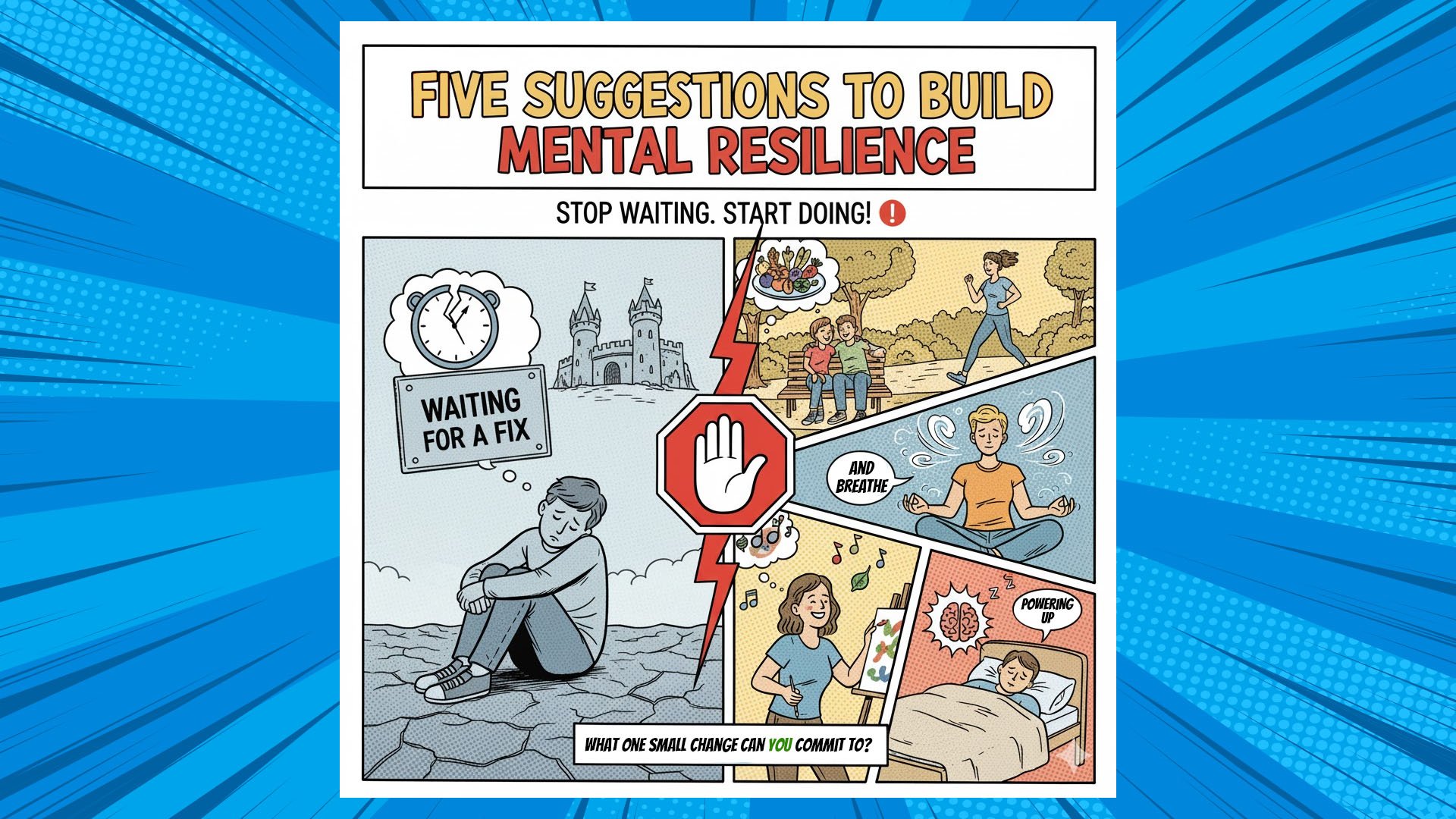
The Vicious Cycle: Waiting to be Fixed. Here are a few suggestions for helping to build mental resilience.
We all want better mental health. But here’s the tough question: If you want to feel different, are you willing to do different? 🤔
It’s incredibly easy to slip into the mindset that the NHS or our wider healthcare system should be the ones to “fix” us. We expect a referral to magically resolve the issues that have accumulated over months or years.
The stark reality is that services are stretched. While 91.9% of referrals for NHS Talking Therapies (IAPT) resulted in treatment starting within 6 weeks in a recent period, many individuals still face long waits for specialist care, particularly in areas such as children and young people’s services. Your urgent need is facing a system-wide backlog.
Stop Waiting. Start Doing. 🛑
While you wait for (or alongside) professional support, there is so much you can control. Your wellbeing is an active daily choice.
Here are five free suggestions to return to the basics that build mental resilience:
Fuel and Move: Ditch the ultra-processed diet whenever possible and find ways to move your body every day. A quick walk or stretch is a biological mood booster.
Community & Nature: Get outside. Even 15 minutes in a park helps. Call a friend. Connection and nature are two of our most powerful natural supports.
The Magic of Breath: Learn box breathing (4 seconds in, 4 hold, 4 out, 4 hold). It’s an instant, on-demand calm switch that regulates your nervous system, anytime, anywhere.
Embrace Play: What did you love doing as a child? Find a hobby—painting, music, gardening, sport—that lets you lose yourself in the process, not the outcome.
Sleep is Your Superpower: Prioritise an hour of screen-free winding down before bed. Quality sleep is when your brain repairs and resets.
Your mental health journey doesn’t start when you get an appointment. It begins when you decide to take a single, different action today.
What one small change can you commit to this week? Let me know in the comments below!
https://www.impactmh.org.uk/wp-content/uploads/2025/11/5-suggestions-to-build-mental-resilience.jpg10801920adminhttps://www.impactmh.org.uk/wp-content/uploads/2015/04/logo-v8.1.pngadmin2025-11-14 14:13:502025-11-14 14:52:24Five Suggestions To Build Mental Resilience
We have an exciting update on how we’re continuing to evolve and enhance the support we offer for your mental wellbeing journey. Our Mental Health & Wellbeing Podcast is coming soon.
We’ve loved connecting with many of you during our monthly Feel Good Friday (FGF) sessions. They were created with the best intentions for connection and community. Still, after careful review, we’ve realised that a fixed, monthly time slot is no longer the most effective or accessible way to reach our whole community. For many of you, juggling work, study, and other responsibilities, the live format became a scheduling challenge rather than a simple support tool.
To ensure that everyone in our Impact community has access to high-impact, flexible, and sustainable wellbeing resources, we are making a strategic shift. We will be discontinuing the live Feel Good Friday sessions on the last Friday of the month, effective immediately.
In its place, we are thrilled to launch “Mind Management Matters,” a brand-new digital learning initiative that fits seamlessly into your life!
This new model is all about high-quality, on-demand support that builds lasting resilience:
🎧 The Podcast Series: We are launching a regular podcast featuring expert tips, practical strategies, and easy-to-digest learning on key topics like stress, focus, and overwhelm. You can listen whenever and wherever works for you—during a commute, a walk, or quiet time.
🧠 Bite-Sized Learning: Every podcast episode will be linked to a concise, 5–10-minute practical resource. Think short video demonstrations, quick PDF guides, or actionable breathing exercises that immediately convert listening into active skill-building.
This shift allows us to move away from a temporary fix to a continuous, self-paced model. Our goal is to empower you to practice mind management consistently, a scientifically proven approach that is the most effective way to build sustainable, positive habits. This way, your wellbeing journey is entirely in your hands, without the pressure of a fixed appointment.
We are incredibly excited about this new chapter and look forward to sharing our first Mind Management Matters resources with you very soon!
Today, October 10th, marks World Mental Health Day—a vital moment to pause, reflect, and reaffirm that mental health is as crucial as physical health. In a world defined by relentless news cycles, digital demands, and global uncertainty, stress, anxiety, and overwhelm have become near-universal experiences.
The good news is that managing these feelings doesn’t require overhauling your entire life. It starts with small, consistent habits that bring you back to a place of stability and calm.
The Modern Overload: Recognising Today’s Stressors
To manage our mental health, we must first recognise the unique pressures of modern life that are contributing to the pervasive sense of overwhelm.
In and Out of Work:
“Always On” Culture: The blurring of work and personal boundaries due to remote access and constant connectivity means many people struggle to switch off. The expectation of immediate responses fuels stress.
Job Insecurity and High Demands: Economic volatility and increasing workloads create a persistent, low-level anxiety about performance and job stability.
Financial Pressures: Nationally and globally, the rising cost of living, inflation, and stagnant wages are top stressors, leading to chronic anxiety about the future and making ends meet.
National and Global Concerns:
Constant Crisis News: Whether it’s political instability, environmental emergencies, or international conflicts, the 24/7 news cycle keeps us tethered to a feeling of global distress, often leading to a sense of powerlessness.
Digital Fatigue: The sheer volume of information, notifications, and social comparisons on digital platforms leads to sensory overload and feelings of inadequacy.
Four Simple Habits to Recalibrate Your Nervous System
While the pressures of the world are real, we can develop practices to build resilience and protect our inner well-being. Here are four fundamental strategies to help you manage stress, anxiety, and overwhelm:
1. Limit Constant News Exposure and Take Digital Breaks
The human nervous system is not built to constantly process tragedy and global crises. Limit your constant news exposure and deliberately step away from your screens. Dedicate specific, short periods each day to check the news, and strictly avoid “doomscrolling”—the habit of consuming large quantities of negative online news. Schedule digital breaks throughout your day, even if it’s just 15 minutes away from your phone, to allow your mind to rest and refocus on your immediate environment.
2. Practice Slow, Gentle Breathing Daily to Regulate Your Nervous System
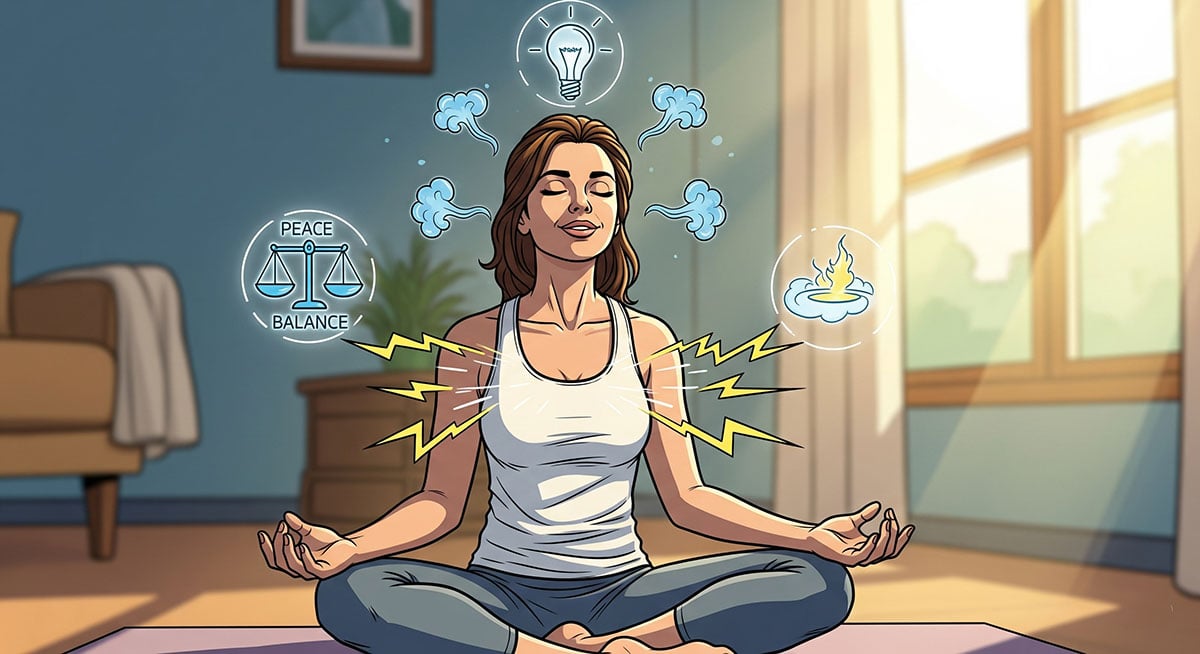
Your breath is your most powerful, immediate tool for regulating stress. When we are anxious, we tend to breathe shallowly and quickly. You can consciously override the stress response by practising slow, gentle breathing daily. Try a simple box-breathing technique:
Inhale slowly for a count of four.
Hold the breath for a count of four.
Exhale slowly for a count of six.
Pause for a count of two.
Repeat for just 3-5 minutes. This simple practice signals safety to your brain, calming your heart rate and easing anxiety.
3. Anchor Yourself in Routines that Bring Calm and Stability
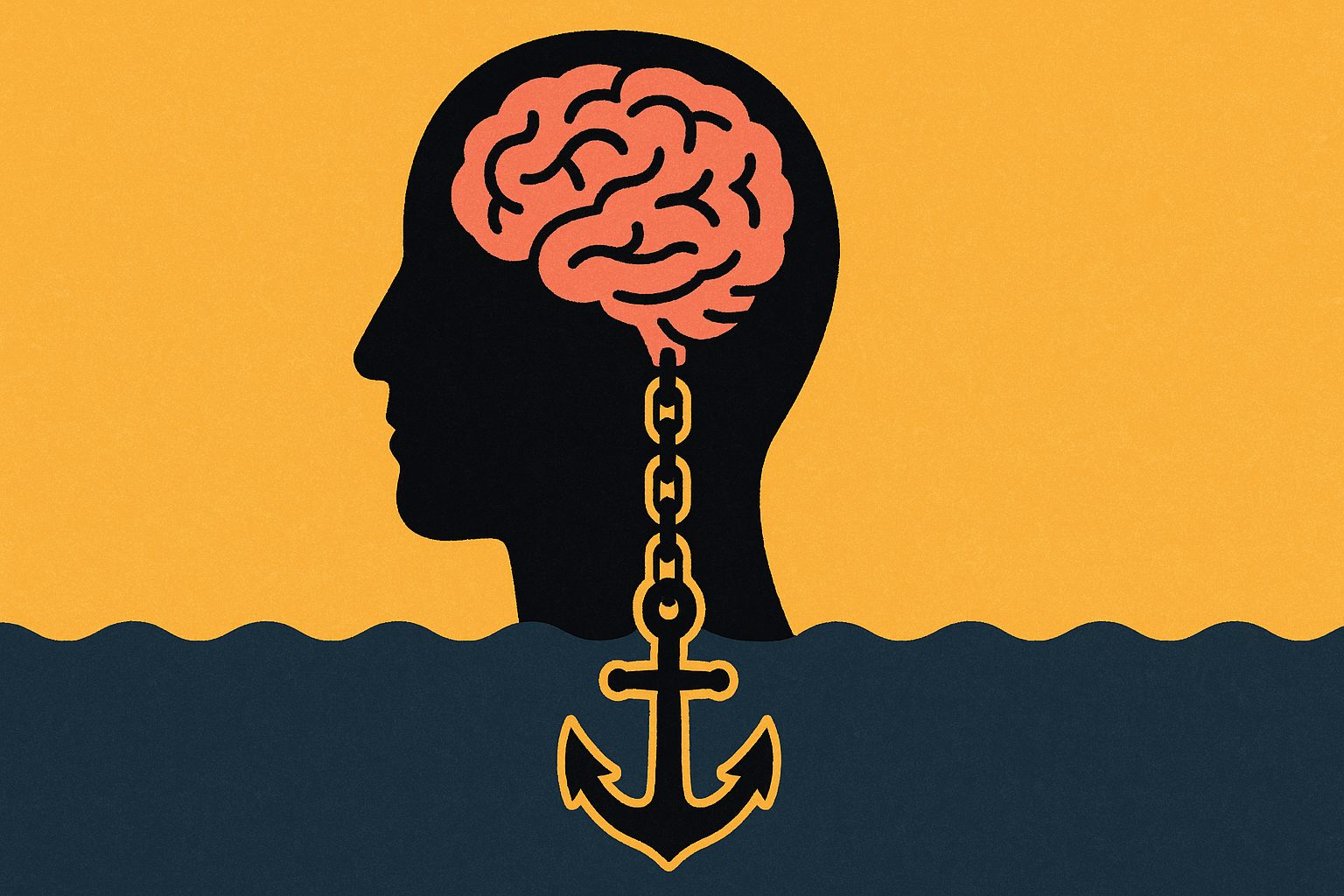
In an unpredictable world, routines are anchors. They provide a sense of control and predictability that combats the chaos of modern life. This doesn’t mean a rigid schedule, but rather establishing non-negotiable daily habits that bring stability. This could be a morning routine that includes quiet time and a healthy breakfast, or an evening ritual that prepares you for rest (like reading a book instead of watching TV). These small acts of consistency create a stable foundation for your day.
4. Reach Out for Help – Whether Through Friends, Professionals, or Community Support
It is a common misconception that seeking help is a sign of weakness. In fact, it is a brave and proactive step towards self-care. Reach out for help when you are struggling.
Friends and Family: Simply sharing your burdens with a trusted loved one can significantly reduce their weight.
Professionals: Don’t hesitate to contact a GP, therapist, or counsellor. Mental health professionals are trained to provide tools and support.
Community Support: Joining a local group, volunteer organisation, or support network can foster a sense of belonging, which is a powerful antidote to anxiety and isolation.
Further Recommendation
If you are looking for more actionable advice on how to integrate simple, effective habits into your day, we recommend listening to:
This podcast offers an insightful discussion on the profound impact of simple physiological adjustments, like breathing techniques, on your overall mental state. It’s a fantastic resource for anyone looking to make a meaningful change in how they handle life’s daily demands.
Remember: On World Mental Health Day and every day, your mental health matters. Be kind to yourself, implement these simple habits, and never hesitate to seek support.
https://www.impactmh.org.uk/wp-content/uploads/2025/10/anchor.png10241536adminhttps://www.impactmh.org.uk/wp-content/uploads/2015/04/logo-v8.1.pngadmin2025-10-10 13:47:562025-10-10 13:48:00Finding Your Anchor: Simple Habits to Manage Stress, Anxiety, and Overwhelm on World Mental Health Day
The shift into autumn and winter brings with it a beautiful change in scenery, but let’s be honest: the shorter days and longer, darker nights can sometimes feel like a bit of a dampener on our usual zest for life. If you’ve noticed a dip in your motivation, inspiration, and drive, you’re definitely not alone! It’s a natural response as our bodies adjust to less sunlight, which plays a crucial role in regulating our energy levels and mood. Think of it like this: your internal battery needs a little extra charge when the sun clock runs low.
Counteracting the Darkness: Small Steps for Big Lifts 💡
The good news is we don’t have to simply resign ourselves to a seasonal slump! By being proactive and incorporating small, positive habits, we can manage the impact of reduced daylight and keep our spirits high:
Maximise Natural Light: Try to spend time near windows during the day. If possible, take short outdoor walks, especially around midday.
Embrace Brighter Spaces: Consider increasing the lighting in your home and workspace. Bright, cool-white bulbs can help mimic natural light and boost alertness.
Maintain Routine: Sticking to regular sleep and work schedules helps keep your body clock stable, which is often disrupted by the lack of morning light.
Fun and Different Ways to Lighten the Mood 🚀
While a cozy night in is tempting (and encouraged!), sometimes introducing a little novelty and activity can be the perfect antidote to the winter blues. Here are a few lighthearted, different activities to help lift your mood:
Become a Culinary Explorer: Forget the quick microwave meals! Pick a new cookbook (perhaps one focusing on a different global cuisine) or search the web for favourite recipes and dedicate one night a week to slow, mindfulcooking. The aroma alone is mood-boosting! 🧑🍳
Start an ‘Anti-Goal’ Hobby: Pick up a hobby that has zero performance pressure. Think painting badly, learning three chords on a ukulele, or writing silly poetry. The goal is pure, unadulterated fun, not mastery. 🎨
Host a ‘Hyggelig’ Gathering: Embrace the Danish concept of Hygge (coziness and comfortable conviviality). Invite friends over for a relaxed evening focused on comfort, candlelight, and good conversation—no fancy planning required! ☕
Launch a ‘Micro-Adventure’: Plan a short, local trip that gets you out of your routine, even for just a few hours. Visit a new museum, explore a park you’ve never been to, or attend a local market. Novelty is a powerful mood elevator. 🗺️
Permission to Pause: Embracing the “Wintering” Season ❄️
While it’s great to find energy and spark, there is profound wisdom in recognising that the colder months can also be a time for rest and rejuvenation. We often carry the pressure of always being “on,” driven, and highly productive, but this expectation can be exhausting.
May encourages us to see these darker, slower months not as a period to be fought, but as a necessary, natural cycle of rest. She beautifully articulates the need to give ourselves permission to reduce self-expectations and use the quiet season for nurturing and self-reflection. Just as nature slows down, we too can benefit from a season of inward focus, allowing ourselves to heal, gather strength, and prepare for the growth that will inevitably come with spring.
So this year, let’s not just survive the darker months—let’s thrive by resting, playing, and consciously choosing activities that genuinely light up our lives! Go ahead, give yourself that break, and let your inner spark shine, even when the sun goes down early. What will you do to recharge this winter? 👇 Let us know in the comments.
https://www.impactmh.org.uk/wp-content/uploads/2025/10/People-Chatting-In-Autumn.jpg8001200adminhttps://www.impactmh.org.uk/wp-content/uploads/2015/04/logo-v8.1.pngadmin2025-10-08 10:12:242025-10-08 10:37:52Reignite Your Inner Spark: Thriving Through the Autumn and Winter Glow Up! ✨
For many of us, the journey through our 20s, 30s, and 40s is a relentless ascent—focused on career milestones, family responsibilities, and building financial security. We often postpone our personal passions, those ‘someday’ dreams, convinced there will be more time later. But what happens when “later” arrives, and we find ourselves at 50+, still yearning for the creative outlets we once cherished, or even new ones we’ve yet to discover?
It’s a decisive moment when we realise that having purpose doesn’t have to mean enduring a job that no longer makes us happy, or being defined only by our professional titles. The idea that our most meaningful contributions are behind us, or that new adventures are only for the young, is a myth we need to actively dismantle.
The Wisdom of Age, The Fire of Creation
The truth is, reaching 50+ isn’t an ending; it’s a profound new beginning, full of experience, wisdom, and often, a newfound freedom. This is precisely the time to embrace those dormant desires, to try new things, meet new people, and nurture hobbies that truly ignite your spirit.
As philosopher Alan Watts eloquently said, “The only way to make sense out of change is to plunge into it, move with it, and join the dance.” This sentiment is especially relevant in later stages of our careers. The ‘dance’ now might involve picking up that paintbrush again, learning a musical instrument, writing that novel you’ve always dreamed of, or even starting a passion project that could develop into something more.
Why Now is Your Time to Thrive
There’s a growing movement of individuals proving that age is simply a number when it comes to creativity and purpose:
Renewed Energy & Perspective: Many find that the reduced intensity of earlier career demands, or the wisdom gained from years of experience, provides more mental space and clarity to pursue personal interests.
The Power of Community: Engaging in new hobbies naturally leads to meeting new people who share your passions, expanding your social circles and injecting fresh energy into your life. The connections formed in these spaces are often deeply enriching and validating.
Health & Wellbeing Benefits: Research consistently shows that engaging in creative activities and lifelong learning significantly boosts cognitive function, reduces stress, and enhances overall mental wellbeing. It’s a powerful antidote to burnout and a key ingredient for sustained happiness.
Legacy Beyond Work: Crafting, creating, or learning something new allows you to build a different kind of legacy – one based on personal fulfilment, joy, and the inspiration you provide to others. Take Vera Wang, who started designing wedding dresses at 40 and became a global fashion icon, or Colonel Sanders, who franchised KFC at the age of 62. Their stories remind us that impactful beginnings can happen at any age. Closer to home, think of the countless individuals in the UK who take up new entrepreneurial ventures or creative pursuits after retirement, enriching their lives and communities.
This stage of life is an invitation to rediscover yourself, unburdened by earlier expectations. It’s about consciously choosing joy, embracing new adventures, and allowing your innate creativity to flourish. Don’t let the societal narrative tell you to slow down; instead, lean into the expansive possibilities of what’s next. Your most vibrant chapter might just be waiting to be written.
https://www.impactmh.org.uk/wp-content/uploads/2025/09/Beyond-The-Board-Room.jpg10241536adminhttps://www.impactmh.org.uk/wp-content/uploads/2015/04/logo-v8.1.pngadmin2025-09-04 13:25:532025-09-04 13:30:57Beyond the Boardroom: Rekindling Your Creative Spark After 50+
Menopause—the final frontier of a woman’s reproductive life—can be a challenging journey. For many, it’s a time marked by a host of unwelcome symptoms, from hot flushes and sleepless nights to brain fog and anxiety. While hormone replacement therapy (HRT) is a well-established medical option, an increasing number of women are seeking holistic and complementary approaches to manage their symptoms. One such method gaining popularity is the Buteyko Method, a breathing technique that offers a surprising and effective way to find balance and wellbeing during this transitional phase.
What is the Buteyko Method? 🧘♀️
Developed by Ukrainian doctor Konstantin Pavlovich Buteyko in the 1950s, this method is based on the principle that many modern ailments, including respiratory issues, are caused by chronic over-breathing, or hyperventilation. The Buteyko Method teaches you to correct this by focusing on nasal breathing, reducing your breathing volume, and practising breath-holding exercises. The goal is to bring your breathing back to a normal, gentle rhythm. While it may seem counterintuitive, the core idea is that less is more when it comes to respiration.
How Can it Help with Menopause Symptoms?
The connection between breathing and menopause symptoms lies in the delicate balance of gases in our bodies, particularly carbon dioxide (CO2). When we habitually breathe too much, we expel excessive amounts of CO2. This might sound like a good thing, but in reality, CO2 is not just a waste product; it’s a vital gas that helps release oxygen from the blood to the tissues and organs. A drop in CO2 levels can lead to a phenomenon known as the Bohr effect, where oxygen is held too tightly to haemoglobin, meaning it can’t be delivered efficiently to your cells.
This can result in a whole host of issues that many menopausal women will recognise:
1. Hot Flushes 🔥
Hot flushes are believed to be triggered by a minor change in the body’s thermoregulatory system, controlled by the hypothalamus. Over-breathing can exacerbate this by leading to an unstable nervous system, which in turn can trigger or worsen hot flushes. By learning to breathe gently and calmly through your nose, you help to stabilise the nervous system, potentially reducing the frequency and intensity of these episodes.
2. Sleepless Nights 😴
Many women experience night sweats and insomnia during menopause. The sympathetic nervous system, responsible for our ‘fight or flight’ response, becomes overactive, making it difficult to relax and fall asleep. Buteyko’s gentle breathing techniques help to activate the parasympathetic nervous system, the body’s natural rest and digest system. This promotion of relaxation can lead to a more peaceful night’s sleep, as well as reducing the chance of night sweats, which are often a result of an overstimulated nervous system.
3. Brain Fog 🧠
That foggy, forgetful feeling is a common complaint. It can be linked to poor oxygen delivery to the brain. When we over-breathe, we reduce CO2 levels, which constricts the blood vessels supplying the brain. By improving your breathing, you allow these blood vessels to dilate, ensuring a better supply of oxygen and nutrients to the brain. This can lead to improved clarity, focus, and memory.
Getting Started with Buteyko
The method is best learned from a certified practitioner who can guide you through the exercises and help you monitor your progress. The core exercises include:
Controlled Pause (CP): This is a simple test to measure your current breathing volume and a foundation for your practice.
Reduced Breathing: This involves consciously taking smaller, quieter breaths, which helps to increase CO2 tolerance.
Breathing through the nose: This is a fundamental part of the practice, as it helps to humidify, filter and warm the air we breathe, as well as engaging the diaphragm for a more efficient and relaxed breath.
The key to success is consistency. Practising for just a few minutes a day can make a significant difference. It’s a gentle, non-invasive approach that puts you back in control of your body.
In a world that often rushes us, the Buteyko Method offers a mindful pause. By reconnecting with your breath, you can find a pathway to better sleep, a clearer mind, and a greater sense of calm, transforming the challenges of menopause into an opportunity for profound self-care. It’s not just about managing symptoms; it’s about reclaiming your vitality, one gentle breath at a time.
As a breath coach and a woman who is postmenopausal, which can bring a mix of new and familiar challenges (apologies to anyone who thought postmenopause meant it was all over…!), I found this tutorial very helpful, especially for reducing hot flushes: simple instructions, a calming, wonderful voice, and just over nine minutes of peaceful gratitude.
https://www.impactmh.org.uk/wp-content/uploads/2025/08/Buteyko-Image.jpg6541200Deanne Clarkhttps://www.impactmh.org.uk/wp-content/uploads/2015/04/logo-v8.1.pngDeanne Clark2025-08-18 14:23:032025-08-18 14:25:20The Breath of Change: Finding Balance and Wellbeing During Menopause
We may request cookies to be set on your device. We use cookies to let us know when you visit our websites, how you interact with us, to enrich your user experience, and to customize your relationship with our website.
Click on the different category headings to find out more. You can also change some of your preferences. Note that blocking some types of cookies may impact your experience on our websites and the services we are able to offer.
Essential Website Cookies
These cookies are strictly necessary to provide you with services available through our website and to use some of its features.
Because these cookies are strictly necessary to deliver the website, refusing them will have impact how our site functions. You always can block or delete cookies by changing your browser settings and force blocking all cookies on this website. But this will always prompt you to accept/refuse cookies when revisiting our site.
We fully respect if you want to refuse cookies but to avoid asking you again and again kindly allow us to store a cookie for that. You are free to opt out any time or opt in for other cookies to get a better experience. If you refuse cookies we will remove all set cookies in our domain.
We provide you with a list of stored cookies on your computer in our domain so you can check what we stored. Due to security reasons we are not able to show or modify cookies from other domains. You can check these in your browser security settings.
Google Analytics Cookies
These cookies collect information that is used either in aggregate form to help us understand how our website is being used or how effective our marketing campaigns are, or to help us customize our website and application for you in order to enhance your experience.
If you do not want that we track your visit to our site you can disable tracking in your browser here:
Other external services
We also use different external services like Google Webfonts, Google Maps, and external Video providers. Since these providers may collect personal data like your IP address we allow you to block them here. Please be aware that this might heavily reduce the functionality and appearance of our site. Changes will take effect once you reload the page.
Google Webfont Settings:
Google Map Settings:
Google reCaptcha Settings:
Vimeo and Youtube video embeds:
Other cookies
The following cookies are also needed - You can choose if you want to allow them:
Privacy Policy
You can read about our cookies and privacy settings in detail on our Privacy Policy Page.